


It’s one of the most common questions homeowners ask, and for good reason:
How much can I sell my house for?
Whether you’re actively planning to sell or simply curious about your home’s value, the answer matters. It impacts your next move, your financial planning, and how you approach the market. The challenge is that the number most people want is not always the number the market will support.
This post is designed to help you understand how home value is actually determined, why online tools only tell part of the story, and why working with a professional matters more than ever in today’s Charlotte housing market.
Why This Question Deserves a Real Answer
Home value is not a single number pulled from a database. It’s the result of multiple variables working together at a specific moment in time.
When sellers rely on incomplete or overly simplified information, it often leads to:
- Unrealistic expectations
- Frustration during the selling process
- Missed opportunities early in the listing period
- Longer days on market
- Price reductions that could have been avoided
Understanding how value is determined allows you to position your home strategically instead of reactively.
What Actually Determines How Much You Can Sell Your Home For
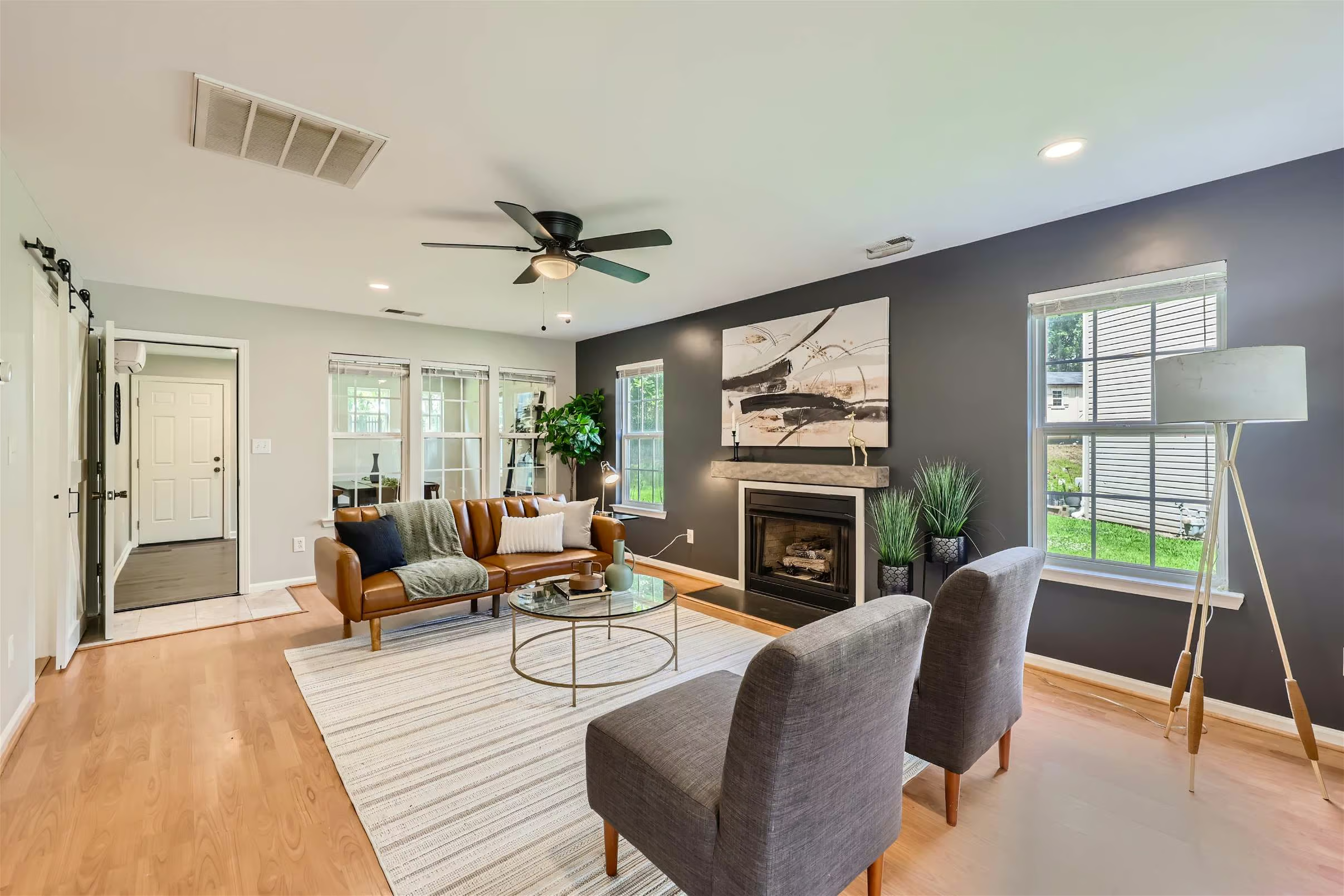
The Charlotte real estate market has become increasingly hyper-local. Two homes with the same square footage can sell for very different prices depending on details that automated tools cannot interpret.
Location and Micro-Market Behavior
Citywide averages rarely apply. Value is driven by:
- Neighborhood-specific demand
- Proximity to amenities, employment hubs, and conveniences
- Street location and lot characteristics
- NC versus SC tax implications
This is why pricing in South End looks different from South Charlotte, Lake Norman, Lake Wylie, or the SC corridor. Each micro-market behaves differently, and value must be evaluated within that context.
Keep Reading: Learn all about the differences between North Charlotte Vs. South Charlotte on my blog.
Condition, Presentation, and Perceived Value
Buyers compare homes quickly and critically.
Value is affected by:
- Overall condition
- Quality of updates
- Deferred maintenance
- Layout and flow
- How the home shows online and in person
- Buyer’s perceived value offered in the home at the listed price point
For example, at higher luxury price points, buyers are not just buying square footage. They are expecting features that support lifestyle and experience. Homes priced above certain thresholds may be compared against properties with pools, custom landscaping, outdoor kitchens, or thoughtful hardscaping designed for entertainment.
Two identical floor plans can have very different outcomes if one is prepared and positioned thoughtfully and the other is not.
Whether or not your home sells fast depends entirely on the strategy and the agent you work with. That’s why it’s so important to find a top real estate agent to sell your home.
Market Conditions and Timing Matter
Markets shift, and value shifts with them.
Buyer behavior, inventory levels, interest rates, and competition all influence what buyers are willing to pay right now, not what made sense six or twelve months ago. This is why pricing based on past peak conditions often leads to disappointment.
Buyer behavior will also tell a seller very quickly what the market is or is not willing to pay. You do not want to discover after listing that your home was priced too high and now requires a reduction.
Price reductions can feel like a safety net, but they can sometimes hurt more than help. Buyers may wait to see how much further a seller is willing to go, reinforcing their belief that the initial price was unsupported.
In a seller’s market, sellers may have more leverage, but that does not mean pricing without strategy. In a buyer’s market, buyers have more options and will expect strong value, thoughtful presentation, and realistic pricing. The market always rewards clarity over ego.
With so many factors at play, you can see why no two home sales are the same. Questions like “how soon will my home sell,” and “how many showings before my home sells,” are difficult to answer with absolute certainty.
Buyer Psychology: The Missing Piece
This is the piece most automated tools miss.
Buyers are not spreadsheets. They respond to:
- First impressions
- Perceived value
- How a home compares to others they’ve already seen
- How confident they feel about the price relative to the market
Pricing is not just math. It’s strategy.
View some of my past client success stories to see the results of a good strategy.
Why Online Home Value Tools Only Tell Part of the Story
Many homeowners start with automated estimates. Tools like Zillow’s Zestimate or similar platforms can be helpful as a starting point, but they should never be treated as definitive.
Automated valuations:
- Pull from public records and recent sales
- Do not see inside your home
- Do not account for condition, upgrades, or deferred maintenance
- Do not understand how your home compares to what buyers are actively touring
- Respond slowly to market shifts
- Do not account for real-time market patterns, nuance, or buyer behavior
After the market shifted last year, many automated estimates lagged behind reality for months. Some were too high, others too low, and most missed nuance entirely.
These tools provide a snapshot, not a pricing strategy.
The Zillow Conversation and Why It Needs Context
Zillow estimates are often the number sellers come in ready to defend. That’s understandable. It feels objective, and it’s easy to find.
But here’s the truth.
A Zestimate is:
- A broad estimate
- A delayed response to market changes
- Not a substitute for professional analysis
I’ve seen Zestimates come in higher than the market supports, lower than the market supports, and sometimes close for the wrong reasons entirely.
The issue is not the tool itself. The issue is consumers treating it as law instead of context.
When sellers fixate on an automated number rather than market-supported value, they often miss opportunities to:
- Price strategically
- Create competition
- Capture early buyer momentum
- Achieve the strongest possible outcome
The goal is not to fight the algorithm. The goal is to understand what the market will actually pay.
Keep reading: Learn more about pricing strategy and read our blog about Appraised Values Vs. Market Value.
Why a Professional Evaluation Matters
Determining how much you can sell your house for requires:
- An in-depth look at relevant sales
- An understanding of current buyer behavior
- Knowledge of neighborhood-specific trends
- A realistic assessment of condition and presentation
- Strategy, not guesswork
This is where working with a human, matters.
I evaluate homes based on what buyers are responding to, not just what sold nearby. I look at how your home fits into the current market landscape and what can be done to position it effectively.
That evaluation often includes guidance on:
- Pricing strategy
- Preparation and improvements
- Timing
- Marketing approach
- What to expect once listed
Where Home Value Tools Fit In
For homeowners who want a place to start, I can provide tools like Home Bot which can be helpful for tracking general trends and staying informed over time.
They are useful for:
- Monitoring market movement
- Understanding broad value ranges
- Observing changes month over month
They are not a replacement for professional guidance, but they can support it when used correctly.
Why This Matters to You
If you’re asking, “How much can I sell my house for?” what you’re really asking is:
- Can I make a move confidently?
- Will this support my next chapter?
- Am I positioned to succeed?
Those answers require more than a number. They require clarity, context, and strategy.
I’m happy to share the Homebot Valuation tool so you can take a look at where your home sits currently. If you want to dig deeper or talk through what the numbers actually mean for you, a conversation can bring far more clarity than an algorithm ever will.
Final Thoughts
Your home’s value is not determined by an algorithm alone. It’s determined by the market, buyer behavior, and how well your home is positioned at the moment you sell.
If you’re curious about your home’s value or thinking about selling, I’m always happy to talk through it with you honestly and transparently.
Ashley Horton
Premier Sotheby’s International Realty
704.975.5418

It Starts with a Conversation!
Buying, selling, or relocating to Charlotte? Get in touch with me here to get started!